







Milling machine VF-1
Volksfräse VF-1 by Uncle Phil
Reading time approx. 6 minutes
Milling machines are expensive, heavy, and so large that they won’t fit into a hobby basement. You can accept that – or you can do what YouTuber Uncle Phil did. He independently developed a fully functional CNC milling machine. And not only that: He created the complete construction plans and design drawings and made them available online for you to replicate. If you’re now wondering what a “Volksfräse” actually is, what it’s used for, and why this CNC mill could enrich your hobby workshop – then you should definitely keep reading!
Contents

Key points
- +
The Volksfräse VF-1 is a DIY CNC mill by YouTuber Uncle Phil – affordable, stable, and powerful enough for aluminum.
- +
The machine is based on aluminum profiles, linear guides, and 3D-printed components and can be expanded modularly.
- +
A matching set with all aluminum components is available in the shop – perfect for a quick start in CNC machine building.
What is a milling machine?
Milling machines are quite an “old” invention. As early as 1818, the first machines were developed in which a rotating tool – the cutter – machines a stationary workpiece. The original milling machines had to be operated by hand. And for quite a long time. It wasn’t until the 1970s that computer-controlled milling machines began their triumph. The computer control also gave today’s extremely widespread CNC (Computerized Numerical Control) milling machines their name.
What is a CNC mill?
In conventional milling machines, a human operator must adjust the individual axes to create the desired geometry of the workpiece. In CNC mills, this is handled by computer control. The machine’s control unit calculates and regulates each axis to ensure continuous control of the relative movement between tool and workpiece. To ensure the machine always knows the exact position of the tool, coordinate systems are used – you may remember them from school.
A simple CNC milling machine has three axes:
• X-axis: the longitudinal axis
• Y-axis: the transverse axis
• Z-axis: the vertical axis
By combining coordinate points of all three axes, the milling tool moves to the programmed position and performs material removal there. To achieve high precision, CNC axes use their own control loops with absolute or incremental measuring systems. These systems measure the axis positions and report them to the control unit, which compares target and actual positions and makes corrections accordingly.
Uncle Phil makes it practical
CNC milling machines are extremely practical tools. If you are familiar with G-code (the “language” of CNC machines) and CAD programs, you can manufacture almost anything from aluminum, steel, stainless steel, or even wood. CNC mills can mill, drill, cut threads, create grooves, and much more. The problem: industrial-quality machines often weigh several tons, cost the equivalent of several annual salaries, and require a large workshop space.
However, Uncle Phil proves that powerful milling work is also possible in the hobby sector with his self-built CNC mill. He and his team developed a DIY CNC milling machine over several months. It can be built affordably (under €1000 if desired), is variable in size, and has enough spindle power to machine aluminum – or plastics, or wood. Even steel has already been successfully machined!
The gantry-style Volksfräse
Uncle Phil designed his DIY CNC machine as a gantry mill. In this design, the tool is guided on a crossbeam between two machine columns – forming the characteristic “portal” structure. In his design, the table with the workpiece remains fixed while movement is executed by the axes. Gantry mills are ideal for quickly machining larger surfaces such as aluminum sheets. They also offer high positioning accuracy and reduced vibration, which improves surface quality.
Precision guidance matters
For reliable axis movement, proper guide systems are essential. Common options include:
1. Flat guides: Steel rails mounted to the base structure with rolling elements. Extremely stable but oversized for DIY use.
2. Hydrostatic guides: Use pressurized lubricant films to eliminate friction. Technically impressive but unnecessary and too expensive for hobbyists.
3. Linear guides: Rails with ball carriages that enable fast and highly precise positioning. Affordable, low-maintenance, and ideal for DIY CNC machines.
Uncle Phil chose linear guides for his machine.
Mill, print, build
Much of Uncle Phil’s CNC machine consists of components he milled himself or produced with a 3D printer. You can watch the entire process on YouTube – replication is explicitly encouraged.
The machine includes many milled aluminum parts. As Uncle Phil humorously puts it: “Since I was clever enough to build a mill from parts that are made with a mill, I’m milling the milling parts of the mill with a mill.”
Other components are 3D-printed to achieve specific geometries.
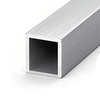
For stability, industrial CNC machines often use cast-iron bases. Since Uncle Phil didn’t have a foundry nearby, he opted for 60 mm aluminum profiles for the base frame. These profiles are available in various sizes and offer high flexibility for axis dimensions.
No milling machine or 3D printer yet? Uncle Phil has partnered with companies that provide pre-sorted components so you can get started more easily.
Aluminum set for the Volksfräse
All raw aluminum sheets and plates required for Uncle Phil’s mill are available in our shop. To save you the effort of searching for the right parts, we’ve bundled all necessary aluminum components into a convenient set:
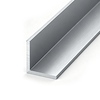
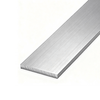
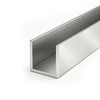
Set of aluminum plates and brackets for the Volksfräse
High-quality, precision-milled on both sides and delivered with protective film.
Or browse our complete range of aluminum plates.
And now: Ready, set… let the chips fly!

FAQ about the Volksfräse VF1
What is the Volksfräse VF1?▸
The Volksfräse VF1 is a popular DIY CNC milling machine project for beginners. It is built from standard components and offers an affordable way to implement your own CNC projects – for wood, aluminum, or plastic. Plans and parts lists are freely available online.
What can the Volksfräse be used for?▸
The VF1 is ideal for precise milling in wood, aluminum (depending on setup), plastic, acrylic, and similar materials. Popular applications include model making, DIY furniture, technical components, and creative maker projects.
Can you machine aluminum with the Volksfräse?▸
Yes – with a stable frame, suitable spindle, high-quality tooling, and reduced feed rates, aluminum machining is possible. Cooling and vibration reduction significantly improve results.
What do I need to build the Volksfräse?▸
You need a stable frame (e.g., aluminum profiles), linear guides, stepper motors or servos, control electronics, a milling spindle, and CNC software. Construction plans, BOM lists, and forum tutorials are also helpful.
Where can I find plans for the Volksfräse?▸
You can find VF1 plans in DIY communities such as unclephil.de, CNC wikis, YouTube projects, and forums like CNC-Forum.de.
Are there complete kits available?▸
There is no official complete kit, but we offer a set of precisely cut plates and brackets as raw material for self-machining.
What are the advantages of an aluminum frame?▸
Aluminum profiles are lightweight, corrosion-resistant, stable, and modular. They can be cut precisely, assembled easily, and provide a durable, low-vibration base for CNC milling – ideal for DIY construction.
