






The aluminum lawn edge
Lawn edging: The optimal solution for a well-maintained garden border
Reading time approx. 2.5 minutes
Aluminum lawn edging is not only functional but also extremely easy to care for. It requires almost no maintenance and retains its shape and color for a long time. In addition, it is very stable and resistant to weather conditions. This makes it perfect for outdoor use and it can be used all year round without any problems.
With metal lawn edging, you can design your garden individually and enhance its appearance. Thanks to the clean lines and elegant look, they give your outdoor area a modern and well-kept appearance. They also make it easy to maintain lawn areas and make mowing and trimming the edges easier.
Overall, aluminum lawn edging offers a multitude of advantages and is a worthwhile investment for every garden lover. With its help, you can make your garden not only functional but also visually appealing and enjoy it for a long time.
Contents

The essentials in brief
-
+
Aluminum lawn edges are rust-proof, weather-resistant, and particularly durable – ideal for year-round outdoor use.
-
+
They provide a clean boundary between lawns, flower beds, and paths – also ideally usable as a mowing edge.
-
+
Flexibly formable, easy to install, and visually subtle – for modern, well-kept garden areas.
Why is aluminum lawn edging the right choice for your garden?
Aluminum is a light and elegant material that is corrosion-resistant due to its thin oxide layer. It is less susceptible to corrosion and can be easily framed without losing stability. Aluminum lawn edging sheets are particularly suitable for less frequently used locations and can be neatly installed with a lawn edger. For tree surrounds, tree rings can be laid, which can be easily joined together and filled with lawn edging stones or soil. The design possibilities are diverse.
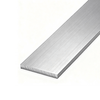
Which aluminum flat profiles do we have for your lawn or bed edging?
We offer the following aluminum flat profiles:
- 100 x 3mm up to 6000mm
- 100 x 4mm up to 6000mm
- 100 x 5mm up to 6000mm
- 120 x 5mm up to 6000mm
- and many other dimensions
Advantages for aluminum lawn edging, flower bed edging, or bed surrounds:
With a metal lawn edge, also known as a mowing edge, you can neatly separate flower beds and lawn areas from each other. This clear boundary prevents the mixing of different materials or areas in the garden and keeps plants and lawn growth in check. Maintenance is made easier and a harmonious overall picture is created. Thanks to the slim material, the lawn edges blend unobtrusively into the natural environment and can be flexibly adjusted for curves. Metal lawn edges are rust- and weather-resistant, which guarantees their durability. They are also more cost-effective compared to lawn edging stones.
- High flexibility
- Easy handling
- Corrosion resistance
- Good price-performance ratio
Application examples for aluminum lawn edging:
- Mowing edge for lawn mowers
- Pond borders
- Bed surrounds around trees
- Boundary between stones, bark mulch, or planting
- Bed boundary as protection against grass growth, weeds, or slugs
If you also want to prepare your garden for smart garden technology, a suitable robotic lawnmower garage is also worthwhile. It protects the robotic lawnmower from direct weather and can be visually combined neatly with lawn edges and clear garden areas.
Construction guide – Mowing edge for the lawn mower

1. Initial situation
Despite years of maintenance, the lawn has continued to spread towards the flower bed. The lawn mower has no clear edge to drive along because there is no fixed boundary between the lawn and the bed.

2. Prepare the course of the lawn edge
To set the lawn edge for the lawn mower, an alignment string is first stretched. Then the ground along this line is removed so that a clear boundary between the lawn and the bed is created.

3. Insert aluminum flat profile
The flat profile for the lawn edge, for example 100 x 3 x 2000 mm, can now be positioned at the prepared location and aligned along the string.
You can choose suitable aluminum flat profiles made to measure directly in our online shop.

4. Insert and align the lawn edge
The metal edge is carefully inserted into the ground using a rubber mallet. If necessary, several profiles can be connected to each other.
For a stable lawn edge, the profile should be seated sufficiently deep in the ground. In this example, an installation depth of about 5 cm is used, while the edge still protrudes about 1 to 2 cm above the surface of the earth.

5. Fix the soil and check the height
Finally, the soil around the lawn edge is filled back in and pressed down. After that, the height should be checked once more.
This creates a clean boundary between the lawn and the bed along which the lawn mower can be guided.
You will need the following material and tools:
- Flat profiles 100x3 up to 6000mm
- Stainless steel rivets V4A DIN 7337 or similar
- Spade
- Alignment string
- Rubber mallet, possibly with a tapping block
Metal lawn edges are an effective, durable, and aesthetic solution for designing your garden. They offer clear boundaries between different areas and contribute to the beauty of your outdoor area. With the right planning and installation, they become a permanent and low-maintenance part of your garden.
Top selection and advice at Alu-Verkauf
Expertise for 20 years, personal advice also on-site! Simply contact us by phone at 05121 28-290-0 or write us an email with your question to verkauf@alu-verkauf.de. We look forward to hearing from you.
Matching flat profile for your lawn edge
For a stable and clean lawn edge, an aluminum flat profile in 100x3 mm is particularly suitable. It ensures a clear separation between lawn, bed, gravel, or paving and remains permanently corrosion-resistant.

FAQ regarding aluminum lawn edging
What is an aluminum lawn edge?▸
An aluminum lawn edge is a robust bed border made of aluminum profiles. It separates lawns from beds, paths, or areas and ensures clean edges, less maintenance, and a well-kept garden look.
What advantages does aluminum lawn edging offer over plastic?▸
Aluminum is light, weather-resistant, rust-proof, and durable. Compared to plastic, it remains stable, does not warp, and still looks good after years. In addition, it can be installed and adjusted precisely.
How long does aluminum lawn edging last outdoors?▸
Aluminum is extremely corrosion-resistant and can last for decades outdoors. A high-quality surface coating extends the lifespan even further.
How do you install aluminum lawn edging correctly?▸
The lawn edge is anchored in the ground along the desired edge, usually in combination with a soil or gravel bed. With the help of a lawn edger, a rubber mallet, and possibly ground anchors, it can be aligned cleanly and stably.
Which aluminum profiles are suitable for lawn edges?▸
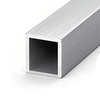
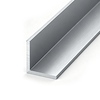
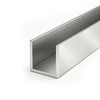
Flat profiles, angle profiles, or U-profiles made of aluminum are particularly suitable. They are available in various heights and thicknesses and can be easily adjusted and connected.
Is aluminum lawn edging expensive?▸
The price depends on material thickness, height, and length. Aluminum is more expensive than simple plastic edges but offers a significantly longer lifespan and a more stable look – which often makes it cheaper in the long run.
Can you install an aluminum lawn edge yourself?▸
Yes – with simple tools like a rubber mallet, tape measure, and angle grinder, you can easily install an aluminum lawn edge yourself. Even flexible transitions and corners can be neatly implemented with the right technique.

Author of this article
ABOUT
MIKE
- Over 15 years of hands-on experience in metalworking and the trades
- Strong technical intuition
- Develops practical, sustainable solutions
- Expert customer support and consulting
