






The Grand Glossary of Aluminum
Dive into the world of aluminum and expand your knowledge about this material!
Aluminium is a versatile material used in numerous industries such as construction, mechanical engineering, aerospace, and the automotive industry. Its special properties – lightweight, corrosion-resistant, and easily formable – make it an indispensable material for constructions and technical applications.
In our aluminium lexicon, you will find all important terms related to aluminium, from profiles and alloys to mechanical properties and processing techniques. Learn more about aluminium sheets, square tubes, tensile strength, anodising, thermal conductivity, and much more.
Information provided without guarantee of completeness/accuracy
A
Alternative spellings: Maße, Dimensionen, Schlüsselweite
Explanation:
Dimensions refer to the measurements of a component, such as length, width, and height. For semi-finished aluminum products, dimensions are crucial for selecting the right workpiece for specific applications, for example, in mechanical engineering or construction.
Learn more about dimensions and available profile measurements here.
Alternative spellings: High-strength free-cutting alloy, Alu 2011
Explanation:
An aluminum alloy with high machinability, ideal for precision mechanical parts.
Alternative spellings: High-strength copper alloy, Alu 2017
Explanation:
A high-strength aluminum-copper alloy used in mechanical and vehicle engineering.
Alternative spellings: Automatenaluminium, Alu 2007
Explanation:
This alloy offers excellent machinability and is used for turned parts, mechanical engineering components, and precision parts.
Alternative spellings: Corrosion-resistant alloy, Alu 5754
Explanation:
This corrosion-resistant alloy is used in vehicle construction and in the chemical industry.
Alternative spellings: Seawater-resistant aluminum, Aluminum 5083
Explanation:
This alloy offers excellent machinability and is used for turned parts, machine components, and precision parts.
Alternative spellings: Standard profile alloy, Alu 6060
Explanation:
This aluminium alloy is corrosion-resistant, easy to anodise and highly malleable. It is used in mechanical engineering, vehicle construction and for structures.
Alternative spellings: High-strength aluminum alloy, Alu 6082
Explanation:
A high-strength aluminum alloy with good corrosion resistance. It is used in load-bearing structures, bridge construction, and shipbuilding.
Alternative spellings: High-strength aluminum-zinc alloy, Alu 7021
Explanation:
A high-strength aluminum alloy with good dimensional stability, often used for aerospace components.
Alternative spellings: Aircraft Aluminum, Alu 7075
Explanation:
This high-performance alloy is characterized by extreme strength and is used in aerospace applications.
Alternative spellings: Aluminum sheet, Aluminum plate
Explanation:
Aluminum plates are flat semi-finished products made of aluminum, available in various thicknesses and alloys. They are characterized by high corrosion resistance, low weight, and good workability. They are used in aviation, vehicle manufacturing, and construction.
Learn more about aluminum plates, aluminum sheets, or aluminum flat sheets here.
Alternative spellings: Alu-Profil, Extruded profile - Profile
Explanation:
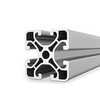
An aluminum profile is a bar-shaped component made of aluminum, formed by extrusion. It is available in various cross-sections, including T-, U-, Z-, and angle profiles. Aluminum profiles are lightweight, corrosion-resistant, and versatile, used for example in mechanical engineering, the construction industry, or furniture manufacturing.
Learn more about aluminum profiles, alu profiles, or extruded profiles here.
Alternative spellings: Aluminium round tube, aluminum hollow section, aluminum round tube
Explanation:
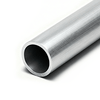
Aluminum tubes are hollow round or square profiles made of aluminum. They impress with their low weight, high stability, and corrosion resistance. Typical applications include constructions in mechanical engineering, furniture manufacturing, and vehicle construction.
Learn more about aluminum tubes, aluminum round tubes, or aluminum hollow profiles here.
Alternative spellings: Anodizing, Oxidation
Explanation:
Anodizing is an electrochemical process for creating a protective oxide layer on aluminum. It improves corrosion resistance and provides a decorative surface.
Learn more about anodizing, Eloxieren, or powder coating here.
B
Alternative spellings: Cold forming, Deformation
Explanation:
Bending is a forming process in which aluminum is brought into a desired shape without material loss. The ductility of the material enables precise bending processes that are used in architecture, mechanical engineering, and furniture construction.
You can find out more about bending or folding aluminum here.
Alternative spellings: Black oxidation, chemical blackening
Explanation:
Blackening is a chemical surface treatment that colors aluminum black while simultaneously forming a thin protective layer against corrosion. This technique is used for optical and functional purposes.
C
Alternative spellings: C-rail, C-beam
Explanation:
A C-profile is an extruded aluminum profile with a C-shaped cross-section. It is frequently used as a guide rail or for reinforcement elements in the construction and furniture industries.
D
Alternative spellings: mass density, specific weight
Explanation:
The density of aluminum is approximately 2.7 g/cm³, which is significantly lower than that of steel. This makes aluminum a preferred material for lightweight constructions. Despite its low weight, aluminum offers high strength and is particularly easy to process.
E
Alternative spellings: Angle profile, edge protection profile
Explanation:
An edge profile is a rod-shaped aluminum part often used for frame constructions.
Learn more about edge profiles, angle profiles, or edge protection profiles here.
Alternative spellings: Anodizing, Electrolytic Oxidation
Explanation:
Anodizing is an electrochemical process for the surface treatment of aluminum. This process creates an oxide protective layer that protects the material from corrosion and makes it visually appealing. Anodized aluminum parts are particularly robust and durable.
Learn more about anodizing, anodization, or electrolytic oxidation here.
F
Alternative spellings: Flat bar, flat strip
Explanation:
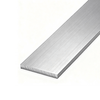
A flat profile is an elongated aluminum component with a rectangular cross-section. It is versatilely used in industry, mechanical engineering, and construction.
Learn more about flat profiles, flat bars, or flat strips here.
Alternative spellings: Machining, CNC machining
Explanation:
Milling removes material using rotating cutting tools to precisely shape aluminum components. Aluminum is particularly well-suited for milling, making it indispensable for manufacturing complex components in industrial settings.
H
Alternative spellings: strength, resistance
Explanation:
The hardness of aluminum describes its resistance to deformation. It varies depending on the alloy and heat treatment.
Alternative spellings: aluminum extruded profile, aluminum hollow bar
Explanation:
A hollow profile is an aluminum profile with an internal void that reduces weight while maintaining stability. These profiles are often used in vehicle construction, facade structures, and mechanical engineering. They offer an ideal combination of lightness, strength, and ease of processing.
K
Alternative spellings: Rust protection, Weather resistance
Explanation:
When exposed to oxygen, aluminum forms a natural oxide layer that protects it from corrosion. This property makes it particularly resistant to weathering and chemicals. Additional processes such as anodizing or powder coating further improve its corrosion resistance.
Alternative spellings: Cu, Electrolytic copper
Explanation:
Copper is a metal with high electrical and thermal conductivity. It is used in the electrical and construction industries.
Alternative spellings:
Explanation:
A copper plate is a flat sheet made of pure copper, used for electrical and industrial applications.
L
Alternative spellings: Aluminium alloy
Explanation:
An alloy is a mixture of two or more metals to improve specific material properties. Aluminum alloys often contain magnesium, silicon, or copper to optimize strength, corrosion resistance, or machinability.
Alternative spellings: electrical conductivity, thermal conductivity
Explanation:
Aluminum has high electrical and thermal conductivity. It is therefore frequently used as an alternative to copper in power lines or as a material for heat exchangers and heat sinks. Thanks to its low weight, it is particularly advantageous for use in electrical engineering and in the automotive industry.
Alternative spellings: Perforated metal, perforated aluminum sheet
Explanation:
A perforated aluminum sheet with holes in various shapes for ventilation, design, or filtration.
M
Alternative spellings: Mg, Strength-enhancing element
Explanation:
Magnesium improves the strength and corrosion resistance of aluminum alloys.
Alternative spellings: Mn, Alloying element for aluminum
Explanation:
Manganese is added to aluminum to improve corrosion resistance and strength.
N
Alternative spellings: Rivet joint, mechanical joining
Explanation:
Riveting is a mechanical joining technique that permanently connects aluminum components. Rivets are particularly used in the aerospace and automotive industries because they offer a strong but lightweight connection.
A slot is a narrow, elongated groove in an aluminum profile, used to accommodate fasteners such as screws, slot nuts, or brackets. It enables flexible and modular construction without the need for drilling or welding.
The slot is often numbered, e.g., slot 8, which means the slot width is 8 mm. This information is important for selecting the right accessories – such as angle connectors or cover profiles for slot 8.
Slots are a central component of the profile system in mechanical engineering, plant construction, and furniture manufacturing. They ensure high stability, easy assembly, and versatile combination options.
O
Alternative spellings: Ellipse tube, oval profile, oval hollow section
Explanation:
An oval tube is an aluminum tube with an oval cross-section. It is often used in design and architectural projects, in furniture construction, and in vehicle manufacturing. Its special shape combines aesthetic elegance with high stability and reduced material usage.
Alternative spellings: surface reaction, metal oxide formation
Explanation:
Oxidation is a natural chemical process in which aluminum reacts with oxygen to form a protective oxide layer. This prevents further corrosion and makes the material durable. Through targeted anodizing, the oxide layer can be strengthened, making aluminum even more resistant to environmental influences.
P
Alternative spellings: high-gloss finishing, mirror-finish
Explanation:
Polishing is a mechanical treatment to smooth the aluminum surface. This creates a shiny or mirror-like appearance.
Alternative spellings: painting, color coating
Explanation:
Powder coating applies a protective and decorative layer of paint to the aluminum. This improves weather resistance and allows for a wide variety of color and texture options.
Learn more about powder coating, painting, or color coating here.
Alternative spellings: Solar Mounting Bracket, Photovoltaic Mounting System
Explanation:
Fasteners, usually made of aluminum, for securely mounting solar modules in photovoltaic systems.
Learn more about PV mounting, solar mounting brackets, or photovoltaic mounting systems here.
R
Alternative spellings: Re-use, Secondary aluminum
Explanation:
Aluminum is 100% recyclable without any loss of quality. The recycling process requires only approx. 5% of the energy needed for initial production. This makes aluminum a sustainable material that is recycled worldwide in various industries.
Learn more about aluminum recycling, re-use, or secondary aluminum here.
Alternative spellings: Al99.5, high-purity aluminum
Explanation:
Pure aluminum contains at least 99% aluminum and is used in chemical and electrical applications.
Alternative spellings: Chequer plate, Tread plate
Explanation:
A checkered plate is a structured aluminum plate with a non-slip surface. It is used for flooring, stairs, and vehicle floors.
Learn more about checkered plates, chequer plates, or tread plates and available sizes here.
Alternative spellings: Connectors, Tube coupling
Explanation:
Aluminum tube connectors enable stable connection of aluminum tubes in constructions.
Learn more about tube connectors, plug connectors, or tube couplings and available dimensions here.
Alternative spellings: end cap, tube cap
Explanation:
These plugs are used to seal aluminium tubes and provide a clean finish.
Find out more about tube plugs or end caps, tube caps and available sizes here.
Alternative spellings: aluminium rod, round material
Explanation:
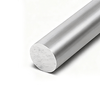
Round aluminum parts such as rods or tubes are used in various industries. They are characterized by high corrosion resistance and good formability.
Learn more about round material or aluminum rods and available profile dimensions here.
Alternative spellings: Aluminium round tube, hollow bar
Explanation:
A round tube is a hollow aluminum profile with a circular cross-section. It is used in vehicle construction, the furniture industry, and for structural applications.
Learn more about round tubes or hollow bars and available profile dimensions here.
S
Alternative spellings: Melting temperature, Liquidus temperature
Explanation:
Aluminum melts at approximately 660 °C. This relatively low melting point enables energy-efficient casting processes, such as die casting or continuous casting. In addition, the low melting point is an advantage for recycling, as the material can be easily re-used.
Alternative spellings: joining, arc welding
Explanation:
Welding is a process for joining metal parts by heat. Aluminum requires special welding techniques such as TIG or MIG welding.
Alternative spellings: Hexagonal profile, Hex bar
Explanation:
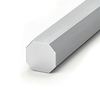
An aluminum hexagonal profile has a hexagonal cross-section and is often used in mechanics as well as for screws and nuts.
Alternative spellings: Si, Hardening additive for aluminum
Explanation:
Silicon increases the castability and hardness of aluminum alloys.
Alternative spellings: machinability, millability
Explanation:
Machinability describes how well aluminum can be processed by milling, drilling, or turning. Aluminum alloys with copper or silicon are particularly easy to machine, while high-strength alloys are more difficult to process.
Alternative spellings: Elastic limit, Yield point
Explanation:
The yield strength is the stress at which a material begins to deform permanently. In aluminum alloys, it influences the load-bearing capacity and resilience in technical applications such as vehicle and mechanical engineering.
T
Alternative spellings: aluminum sheet, metal sheet
Explanation:
Sheet metal refers to flat aluminum plates of standardized dimensions. They are available in various thicknesses and alloys and are used in construction, aviation, and industry.
Learn more about sheet metal, aluminum sheet, or metal sheet here.
Alternative spellings: T-rail, T-beam
Explanation:
A T-profile is an extruded aluminium profile with a T-shaped cross-section. It serves as a connecting element or reinforcement in constructions.
Learn more about T-profiles, T-rails or T-beams and available profile dimensions here.
U
Alternative spellings: U-rail, C-channel
Explanation:
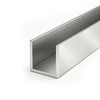
A U-profile is an extruded aluminum profile with a U-shaped cross-section. It is often used for frames, guides, and reinforcements.
Learn more about U-profiles, U-rails or C-channels and their available dimensions here.
V
Alternative spellings: Vierkantstab, Quadratstab
Explanation:
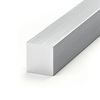
A square profile is a rod-shaped aluminum component with a square or rectangular cross-section. It combines low weight with high stability and corrosion resistance.
Learn more about square profiles and available profile dimensions here.
Alternative spellings: Square tube, rectangular tube
Explanation:
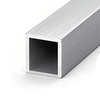
A square tube is a rectangular hollow profile made of aluminum. It combines low weight with high stability and is frequently used in furniture, mechanical engineering, or construction.
Learn more about square tubes and available profile dimensions here.
W
Alternative spellings:
Explanation:
Aluminum has high thermal conductivity, making it ideal for heat sinks, heat exchangers, and electronic components.
Alternative spellings: L-profile, aluminum angle
Explanation:
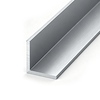
An angle profile is an L-shaped aluminum profile used for constructions and reinforcements. It offers high stability and corrosion resistance at a low weight.
Learn more about angle or L-profiles and available profile dimensions here.
Z
Alternative spellings: Zn, high-strength alloy component
Explanation:
Zinc increases the strength of aluminum alloys and is used in high-performance applications.
Alternative spellings: Z-rail, Z-beam
Explanation:
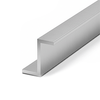
A Z-section is an aluminum profile with a Z-shaped cross-section. It is used for reinforcements, frame constructions, and supports.
Learn more about Z-sections, Z-rails, or Z-beams and available profile dimensions here.
Alternative spellings: tear resistance, mechanical strength
Explanation:
Tensile strength describes the maximum stress a material can withstand before breaking. Aluminum alloys exhibit different tensile strengths depending on their composition, making them particularly suitable for specific applications.
Alternative spellings: Alu-Zuschnitte, Maßbleche
Explanation:
Aluminium blanks are custom-cut sheets, profiles, or plates for specific applications.
Aluminum Lexicon: Technical Terms for Aluminum Alloys Explained Simply
Aluminum is one of the most important and widely used materials in modern industry. Thanks to its unique material properties such as low weight, high strength, corrosion resistance, and good formability, aluminum has become indispensable in many industries. It is used in automotive engineering, construction, electrical engineering, mechanical engineering, and design, among others. However, the multitude of possible alloys and processing methods brings with it a complex technical language that is not always self-explanatory. This is precisely why we created the Aluminum Lexicon.
Our Aluminum Lexicon offers a structured and understandable overview of the most important terms related to aluminum alloys, their composition, properties, and use. It is aimed at anyone who regularly works with aluminum or is interested in the technical background – whether in training, university studies, or professional life.
What the Aluminum Lexicon explains
The lexicon covers a variety of technical aspects:
- Overview of the most common aluminum alloys, including wrought and cast alloys
- Explanation of material designations according to EN, DIN, or international standards systems
- Presentation of relevant alloying elements such as magnesium, silicon, copper, manganese, or zinc
- Description of mechanical properties such as hardness, tensile strength, yield strength, or modulus of elasticity
- Explanation of physical properties such as density, electrical conductivity, or thermal conductivity
- Information on processing methods such as welding, extrusion, brazing, milling, or surface treatment
- List of typical applications of aluminum in various industries
Who the lexicon is for
The lexicon is aimed at technicians, designers, engineers, architects, craftsmen, technical purchasers, students, and anyone who works with aluminum or wants to learn more about the material in depth. It serves as a useful reference for daily work, as a guide for material selection, and for better communication with customers and partners.
Discover the world of aluminum in an understandable way – with our Aluminum Lexicon, your digital companion for technical clarity and practical knowledge.
