






Powder coating or anodizing?
Which aluminum coating is right for your project?
Reading time 8 minutes
What is powder coating? In addition to powder coating and other high-quality finishes, we also offer anodized aluminum profiles. But what does “anodizing” mean, and why is it such a popular aluminum coating?
In this post, we answer these and other questions.
Contents

Key points
- Powder coating offers free color choice & hides surface defects
- Anodizing creates an integrated, extremely durable oxide layer
- Powder coating is more versatile & usually cheaper
- Anodized surfaces are harder & more corrosion-resistant
- The best choice depends on appearance, load, & area of use
Powder coating
What is powder coating?
In powder coating, positively charged powder is applied to a grounded object; electrostatic force makes the colored powder adhere to the metal. The object is then heated so the powder melts and flows, creating an elastic, smooth layer known as an organic finish. The resulting powder coat is extremely durable and offers excellent corrosion resistance and protection against ultraviolet (UV) light. This versatile technique can be applied to a variety of materials, including metals, wood, plastic, glass, composites, and medium-density fiberboard (MDF).

| Advantages of powder coating |
|
| Disadvantages of powder coating |
|
Anodizing
What is anodizing?
Anodizing is an electrochemical process used to create a protective oxide layer on a metal surface. What distinguishes anodizing from other finishing methods is its unique approach of using the existing material instead of introducing new material for coating purposes. This ensures anodized coatings do not detach or peel, resulting in exceptionally durable metal surfaces.
Anodizing is excellent for applications where outstanding corrosion and abrasion resistance is critical. In addition, anodizing can make metal surfaces non-conductive, which can be advantageous in certain situations. It is important to note that anodizing is predominantly limited to aluminum substrates.

| Advantages of anodizing |
|
| Disadvantages of anodizing |
|
Powder coating vs. anodizing – comparison
Process
Anodizing is an electrochemical process that strengthens and thickens the natural oxide layer on a metal surface. In contrast, powder coating is an electrostatic process in which dry, electrostatically charged powder is applied to the surface and then melted by heating. In general, anodizing is mainly applicable to aluminum substrates.
Coating formed
The main difference lies in the layers formed. Powder coating creates an organic, carbon-based coating, while anodizing produces a metal-oxide coating.
Base material
Anodizing is generally limited to aluminum products, while powder coating can be applied to many surfaces, including steel, wood, composites, and others.
Color options
Powder coating offers a wide selection of colors (all RAL shades) because it allows custom colors by mixing pigments. This makes precise color matching easier and is ideal for architectural and decorative applications. Anodizing, on the other hand, has a much more limited color range, including options like black, gold, silver, bronze, and so on.
Color variation
With anodizing, shade differences can occur between different batches, while powder coating generally provides a consistent color without batch-to-batch shade variation.
Surface finish
Anodizing can achieve clear and satin finishes, while powder coating offers a wide range including matte, semi-matte, glossy, super-matte, high-gloss, and textured finishes. The uniformity of an anodized finish tends to highlight irregularities or defects in the base metal. With powder coating, this is usually less of an issue because it can mask surface imperfections and create an even result.
Cost
Costs vary depending on part size, complexity, equipment, materials, and overall process scope. Typically, anodizing involves higher costs than powder coating.
Versatility
Powder coating offers broad color choice (RAL) and compatibility with a variety of materials, while anodizing provides fewer color options and in most cases can only be used on aluminum.
Durability
Anodizing forms a permanent protective layer on metal surfaces and resists fading or damage caused by external factors such as heat, sunlight, and moisture.
Surface hardness
Anodized components have higher hardness compared to powder-coated components.
Service life
Anodized components generally have a longer service life than powder-coated objects.
Corrosion resistance
Both powder coating and anodizing provide effective corrosion resistance, but anodizing is generally the superior option. The anodized layer acts as a protective barrier, effectively preventing moisture and other corrosive elements from penetrating. This makes it suitable for outdoor applications exposed to harsh conditions.
Wear and abrasion resistance
Anodized components offer outstanding wear and abrasion resistance, making them durable and easy to clean and maintain. Powder coating does not provide the same level of wear and abrasion resistance as anodizing.
Surface visibility
Anodizing does not hide weld seams, while powder coating effectively covers and masks them.
Sustainability
Anodized materials can be recycled directly without removing the coating, and the recycled product retains the same properties as the original. Powder coating, however, must be removed before recycling.
Environmentally friendly
Both powder coating and anodizing are environmentally friendly processes. Powder coating produces minimal waste and releases negligible amounts. Likewise, anodizing is chemically stable and non-toxic. Anodizing is not suitable for repairs, dents, or repainting; to protect anodized aluminum products during construction, they may need to be wrapped or otherwise protected. In contrast, powder-coated products can be easily repainted if needed and retain their original color and texture even after repairs.
Applications for powder-coated or anodized aluminum
Powder coatings are often used for outdoor equipment, parts requiring bright colors, and items needing durability and chemical resistance. They are widely used in the automotive industry and for coating metals used in household appliances, aluminum extrusions, drum hardware, guardrails, light poles, posts, signs, fences, and bicycle frames.
Anodized surfaces are often used in building facades, household appliances, food-preparation equipment, sports equipment, and more. This popularity is due to their exceptional durability, corrosion and wear resistance, and their ability to provide better adhesion for primers and adhesives compared to raw metal.
Ordering at Alu-Verkauf
Stock items anodized matte in silver (EV1) and black (C35):
The following items are in stock and can be selected via the webshop and ordered up to a length of 6000 mm. Shipping takes place the next working day.
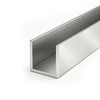
U-profile anodized silver: 10x10x10x1.5; 12x12x12x2; 15x15x15x1.5; 15x15x15x2; 20x20x20x1.5; 20x20x20x2; 25x25x25x2; 30x30x30x2
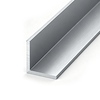
Angle anodized silver: 15x15x2; 20x10x2; 20x15x2; 20x20x2; 25x25x2; 30x10x2; 30x20x2; 30x30x2; 30x30x3; 40x20x2; 40x40x2; 50x20x2; 50x50x2; 60x20x2
Angle anodized black: 30x30x2
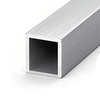
Square tube anodized silver: 20x20x1.5; 20x20x2.0; 30x30x2
Square tube anodized black: 20x20x1.5; 30x30x2
Round tube anodized silver: 20x2; 25x2; 30x2; 32x2; 60x2
Anodizing and powder coating as a customer order up to approx. 2 m² surface area:
We can finish all aluminum profiles and plates (alloy Si 0.5 / AlMg3) individually for you: Please request the parts by email (verkauf@alu-verkauf.de).
Up to a surface area of 2 m², we offer anodizing or powder coating of aluminum at a fixed price:
Powder coating
Lead time 2 weeks for €165 plus VAT for up to approx. 2 m² surface area
Anodizing
Lead time 5 weeks for €165 plus VAT and transport to the anodizing plant for up to approx. 2 m² surface area
Anodizing and powder coating as a customer order over 2 m² and in large quantities:
We’ll be happy to provide an individual quote for the requested powder coating or anodizing. Please request the parts by email at verkauf@alu-verkauf.de.
FAQ on aluminum coatings
Can aluminum be anodized?▸
Yes. Aluminum can be anodized very well – an electrochemical process strengthens the natural oxide layer, makes it corrosion-resistant, and creates a durable, uniform surface.
Can you anodize aluminum yourself?▸
For hobby DIY, anodizing on your own is difficult because the process requires an electrolyte bath and a controlled power supply. For small projects, some workshops offer contract anodizing services.
Can aluminum be powder-coated?▸
Yes – aluminum is very well suited for powder coating. The electrostatically applied powder bonds to the surface when heated and creates a robust, colored protective layer.
Does powder coating adhere to anodized aluminum?▸
Surfaces that are already anodized can generally be powder-coated. However, proper pretreatment is important because anodized layers are smoother – professional surface preparation improves adhesion.
Which is better: anodizing or powder coating?▸
Both have advantages: anodizing creates a very hard, corrosion-resistant layer within the material itself. Powder coating offers a wider range of colors and covers small surface imperfections better. The best choice depends on application, appearance, and mechanical stress.
What are the disadvantages of anodizing?▸
Anodizing is usually more expensive than powder coating and offers a more limited color palette. In addition, small material irregularities can become more visible.
How much does it cost to anodize or powder-coat aluminum?▸
Costs depend on size, surface area, and quantity. Anodizing usually involves more effort and is therefore more expensive. Powder coating is often cheaper, especially for larger quantities or standard colors.
Is it possible to paint or rework anodized aluminum?▸
Yes – powder coating or painting is generally possible, but it requires suitable pretreatment so the new layer adheres well (e.g., sanding and degreasing).
Which color effects are possible?▸
Powder coating offers almost all RAL colors, textured finishes, or special effects. Anodized aluminum is available in a range of shades (e.g., silver, black, bronze), but not as broadly as powder coating.

Author of this article
ABOUT
MIKE
- Over 15 years of hands-on experience in metalworking and the trades
- Strong technical intuition
- Develops practical, sustainable solutions
- Expert customer support and consulting
