






Welding Aluminum: Tips & Techniques for Optimal Results
Precision, technique, experience: Welding aluminum professionally
Reading time 1.5 minutes
Welding aluminum places high demands on craftsmen and technicians. Due to aluminum’s special material properties—such as its high thermal conductivity and the oxide layer on its surface—special knowledge and the right equipment are required. In this article, you’ll learn how to weld aluminum professionally and which welding techniques are best suited.

Key points
- TIG welding for precise, clean seams on thin aluminum
- MIG welding for thick aluminum parts
- Thorough preparation is essential for quality
- The oxide layer must be removed before welding
- Avoid risks such as porosity and distortion in a targeted way
The right welding techniques for aluminum
- TIG welding (Tungsten Inert Gas welding)
TIG welding is ideal when it comes to precise and clean welding of thin aluminum sheets.- Advantages: High accuracy, clean weld seams, low distortion.
- Use: Particularly suitable where weld appearance matters, such as vehicle parts or decorative aluminum components.
- MIG welding (Metal Inert Gas welding)
For thicker aluminum parts, MIG welding is the better choice. This method is more efficient when joining greater material thicknesses.- Advantages: Faster process, ideal for thick-walled components.
- Use: Commonly used in mechanical engineering and large aluminum structures.
Preparation: The key to successful welding work
Before you start welding aluminum, thorough preparation is essential. Proper preparation significantly affects weld quality:
- Cleaning the surface:
Aluminum forms a natural oxide layer in air that can interfere with the welding process. This layer must be removed before welding:- Use a stainless steel brush or special abrasives that are not contaminated with other materials.
- Also remove grease and dirt with a suitable cleaner.
- Using the right filler materials:
Use filler materials matched to the specific aluminum alloys. This ensures better bonding and a stable joint. - Check prior experience:
Aluminum requires welding experience. If you are a beginner, practice on scrap pieces first or consult a professional.
Mastering challenges when welding aluminum
When welding aluminum, specific challenges often arise, such as:
- Porosity: Contamination or moisture can cause pores. Thorough preparation minimizes this risk.
- Distortion: Due to aluminum’s high thermal conductivity, uneven heating can lead to deformation. Work with controlled heat input.
- Stress cracking: This can occur with improper welding technique. Precise machine settings and the correct method help prevent cracks.
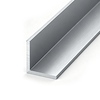
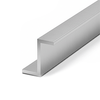
For welding, for example, our angle profiles made from the AlMgSi0.5 alloy are suitable.
Conclusion: Precision and know-how are crucial
Welding aluminum is demanding, but with the right techniques and careful preparation you can achieve excellent results. Whether you choose TIG or MIG welding depends on material thickness and the requirements for the weld seam. Always work cleanly to ensure maximum strength and appearance of the workpiece.
Would you like more tips on welding aluminum or do you need help choosing the right welding machine? We’ll be happy to advise you personally and find the optimal solution for your project together.
FAQ: Welding aluminum
What is the best way to weld aluminum?
TIG welding is best for clean, precise work. For thicker materials or faster work, the MIG process is often used.
What is the best method for welding aluminum?
TIG produces especially clean weld seams, while MIG is more efficient for thicker profiles. Both methods have advantages depending on the application.
Is it better to weld aluminum with TIG or MIG?
TIG is better for thin material and precise work. MIG is easier to learn and faster for larger components.
Can you weld aluminum without shielding gas?
No. Aluminum oxidizes immediately. Shielding gas such as argon is essential for a stable weld seam.
Which welding machine is suitable for aluminum?
An AC-capable TIG or MIG welding machine with good current control is ideal. Aluminum compatibility and a shielding gas connection are important.
Why is welding aluminum so difficult?
High thermal conductivity and the oxide layer make aluminum more difficult to weld. It requires experience and good equipment.
Can I weld aluminum at home?
With the right machine and shielding gas, it is also possible for DIY users. Practice, safety, and cleanliness are crucial.
What happens if you weld aluminum with steel wire?
This results in unstable joints. Aluminum requires special filler materials—steel wire is not suitable.
What should you pay attention to when welding aluminum?
Remove the oxide layer, use shielding gas, maintain an even temperature, use suitable filler wire, and work cleanly.

Author of this article
ABOUT
MIKE
- Over 15 years of hands-on experience in metalworking and the trades
- Strong technical intuition
- Develops practical, sustainable solutions
- Expert customer support and consulting