






Aluminum Surfaces: Properties, Differences & Applications
Untreated, Machined, and Finished Aluminum Surfaces at a Glance
Reading time: 6 minutes
Depending on the manufacturing process and surface treatment, aluminum can exhibit very different properties, structures, and appearances. In this article, we explain the most important surface conditions – from untreated mill finish to saw-cut or face-milled surfaces, as well as anodized or brushed finishes – and show which applications they are best suited for.
Contents

Key Points
- “Mill finish” refers to the raw, untreated aluminum surface
- Machined surfaces differ significantly in structure and application
- Anodized surfaces provide protection, smoothness, and design benefits
- Brushed surfaces create a matte, textured appearance
- The choice of surface depends on function, aesthetics & further processing
Untreated Surface Condition
The term “untreated” or “mill finish” describes aluminum surfaces that have not undergone any additional processing after manufacturing. This means they are neither milled, ground, nor anodized. The visual appearance may vary depending on the machinery and production processes used.
Key characteristics of “mill finish” aluminum surfaces:
- The natural state corresponds to the raw condition of the material after rolling or extrusion.
- Visual differences such as rolling marks or extrusion lines may be visible.
- Often used in applications where appearance is less critical or where further processing is planned.
Aluminum sheets typically have a characteristic bright silver surface. A fine grain along the sheet length is often visible due to the rolling process. Depending on further processing requirements, this grain can be removed by grinding, polishing, or other methods.
Aluminum plates have a matte gray surface that is slightly rougher than sheets. They often carry printed material numbers or specifications applied during production or storage. These markings can be removed if necessary using suitable cleaning agents.
Aluminum Sheets, Plates & Profiles
Characteristics of aluminum plates:
- Matte gray and slightly rough surface, giving them a more robust appearance than sheets.
- Printed information is useful for identification but can be removed for aesthetic applications.
- Frequently used in technical or industrial applications due to their structural stability.
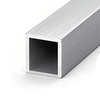
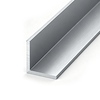
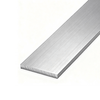
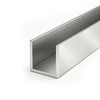
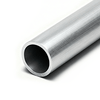
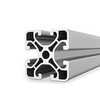
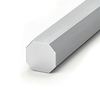
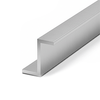
Aluminum profiles are produced using the extrusion process, which can result in characteristic fine longitudinal lines. These lines are typical for extruded aluminum.
Properties of aluminum profiles:
- Profiles, angles, bars, and tubes usually have a matte silver tone that may vary depending on alloy and processing.
- Fine longitudinal lines caused by extrusion are visible.
- Depending on the alloy, profiles may appear lighter or darker.
Saw-Cut Surface Condition
Saw-cut aluminum plates resemble rough-sawn wood in appearance. They are created when plates are cut from a larger aluminum block, typically using a saw. This process leaves visible marks known as saw-cut structures.
Characteristics of saw-cut surfaces:
- The surface is coarse and shows typical saw marks from the cutting process.
- Often used when surface aesthetics are not critical or when further machining (e.g., milling or grinding) is planned.
- Less smooth and more textured compared to milled or polished surfaces.
Machined Surfaces
Machined or face-milled aluminum surfaces are very smooth and flat after milling or similar processing. This step ensures the material is ready for use without additional surface treatment.
Properties of machined surfaces:
- Highly smooth and suitable for precision applications such as bicycle disc brakes.
- No additional corrosion protection required due to aluminum’s natural oxide layer.
- Ideal for industries such as mechanical engineering, aerospace, and automotive manufacturing.
Anodized Surfaces
Anodizing is a common surface treatment that creates a thin but durable oxide layer. This process enhances both physical properties and appearance.
Advantages of anodized aluminum:
- Provides a satin-silver finish popular in design and consumer products.
- Improves tactile feel with a smoother surface.
- Protects against moisture and environmental influences.
- Non-porous surface improves hygiene and ease of cleaning.
- Enhances both functionality and visual appeal.
Brushed Surfaces
Brushed aluminum surfaces are created by a grinding process rather than brushing. Abrasives produce fine lines that reflect light and create a matte metallic appearance.
Tips for creating a brushed finish:
- Start with 320-grit sandpaper for uniform structure; use 240 or 180 grit if needed.
- For a stainless-steel-like effect, use 800/1000 grit and polish afterward.
- Steel wool can create a finer texture.
Using these methods, you can create your own brushed aluminum surface.
FAQ – Aluminum Surfaces
What does aluminum look like in its raw state?▸
In its raw state, aluminum is matte silver and may show rolling or extrusion lines (“mill finish”).
Is aluminum matte or glossy?▸
Untreated aluminum is usually matte. Polishing, anodizing, or brushing can create glossy or textured finishes.
Which surface is suitable for outdoor use?▸
Anodized or powder-coated aluminum surfaces are ideal for outdoor applications due to corrosion resistance and UV stability.
Aluminium-Legierungsserien einfach erklärt

Author of this article
ABOUT
NILS
- Passionate about metal and aluminum
- Experienced product manager
- Solution-oriented and customer-focused
- Technically skilled and pragmatic
- Driven by digital innovation