






Aluminium alloy series explained
Which aluminum alloy is suitable for which application?
Reading time approx. 7 minutes
Not all aluminum is the same. Depending on their composition, aluminum alloys differ significantly in strength, corrosion resistance, workability, and application. The aluminum surface also plays an important role.
In this overview, we show you the differences between 1000, 2000, 5000, 6000, and 7000 series alloys – and explain which series is suitable for which application.
Table of Contents

Key Takeaways
-
+
1000 series aluminum is almost pure, easily formable, and very corrosion-resistant.
-
+
5000 series aluminum is particularly suitable for outdoor areas, humidity, and maritime applications.
-
+
6000 series aluminum is the versatile standard for profiles, mechanical engineering, and DIY projects.
-
+
2000 and 7000 series aluminum offer high strength for technical applications and lightweight construction.
What are aluminum alloys?
Pure aluminum is lightweight and corrosion-resistant, but relatively soft. Therefore, additional elements such as magnesium, silicon, copper, or zinc are deliberately added to the material. This creates aluminum alloys with different properties.
Depending on the composition, the following change:
- Strength
- Corrosion resistance
- Weldability
- Workability
- Weight
- Appearance
The alloys are divided into series – for example, 1000, 2000, 5000, 6000, or 7000 series.
1000 Series – Pure Aluminum
The 1000 series consists of almost pure aluminum with a purity of at least 99%.
Properties:
- very good corrosion resistance
- high electrical conductivity
- very soft and easily formable
- low strength
Typical applications:
- Sheets
- Claddings
- Electrical engineering
- Decorative applications
Suitable for applications with low mechanical stress and high corrosion requirements.
2000 Series – High-Strength for Technology & Aerospace
The 2000 series primarily contains copper as an alloying element. It is one of the high-strength aluminum alloys and is mainly used in technical applications.
Properties:
- very high strength
- good mechanical load capacity
- good workability
- lower corrosion resistance
Typical applications:
- Aerospace
- Mechanical engineering
- Automotive engineering
- Highly stressed components
Suitable for applications with high mechanical stress and low weight.
5000 Series – Corrosion-Resistant & Durable
The 5000 series mainly contains magnesium and is one of the most resistant aluminum alloys.
Properties:
- very good corrosion resistance
- high stability
- good weldability
- ideal for outdoor areas
Typical applications:
- Vehicle construction
- Boat building
- Railings
- Outdoor structures
- Industrial applications
Suitable for constructions with high loads or permanent outdoor use.
For additional corrosion protection or a customized look, many aluminum parts can also be coated or anodized.
6000 Series – The Versatile All-Rounder
The 6000 series combines magnesium and silicon. It is one of the most commonly used alloys in mechanical engineering and for aluminum profiles.
Properties:
- good stability
- very good workability
- corrosion-resistant
- ideal for profiles and constructions
- good balance of weight and strength
Typical applications:
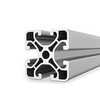
- Aluminum system profiles
- Mechanical engineering
- DIY projects
- Frame constructions
- Furniture construction
Suitable for technical applications and modular constructions.
7000 Series – Maximum Strength
The 7000 series mainly contains zinc and is one of the strongest aluminum alloys.
Properties:
- extremely high strength
- very low weight
- ideal for high-performance applications
- limited corrosion resistance depending on the alloy
Typical applications:
- Aerospace
- Motorsports
- Bicycle frames
- Sports equipment
- Highly stressed constructions
Suitable for lightweight constructions with maximum strength requirements.
Comparison of Aluminum Alloys
| Series | Properties | Typical Use |
|---|---|---|
| 1000 Series | soft, corrosion-resistant, conductive | Sheets, Electrical, Decorative |
| 2000 Series | high-strength, technically loadable | Aerospace, Mechanical Engineering |
| 5000 Series | stable, weather-resistant, weldable | Outdoor, Automotive |
| 6000 Series | versatile, stable, workable | Profiles, Mechanical Engineering, DIY |
| 7000 Series | extremely strong, lightweight | Motorsports, Sports Equipment |
Which aluminum alloy for which application?
The choice of the right aluminum alloy strongly depends on the planned application.
- For decorative or electrical applications: 1000 series
- For highly stressed technical applications: 2000 series
- For outdoor areas and high loads: 5000 series
- For profiles, constructions, and DIY projects: 6000 series
- For maximum strength in lightweight construction: 7000 series
Especially for profiles and modular constructions, the 6000 series is often used, as it combines stability, workability, and corrosion protection well.
Further Information on Aluminum Materials
Would you like to learn more about materials, properties, and differences?
You can find more information on our overview page and in the blog:
FAQ about Aluminum Alloys
What is an aluminum alloy?▸
An aluminum alloy consists of aluminum to which other elements such as magnesium, silicon, or manganese are added. This improves properties such as stability, corrosion resistance, and workability.
Why is aluminum alloyed?▸
Pure aluminum is relatively soft. Alloying makes the material more stable, more resilient, and better suited for technical applications, profiles, or constructions.
What aluminum alloys are there?▸
Aluminum alloys are divided into different series, including the 1000, 2000, 5000, 6000, and 7000 series.
Which aluminum alloy is the best?▸
That depends on the application. For profiles and constructions, the 6000 series is often used. For outdoor areas, the 5000 series is often suitable.
What is the difference between 5000 and 6000 series aluminum?▸
5000 series alloys are particularly corrosion-resistant and weldable. 6000 series alloys, on the other hand, offer a very good combination of stability, workability, and versatility.
What is the strongest aluminum alloy?▸
The 7000 series is one of the strongest aluminum alloys. It is often used in motorsports, aerospace, and lightweight construction.
Can aluminum rust or corrode?▸
Aluminum does not rust like steel. The material forms a natural oxide layer that protects against corrosion.
Which aluminum alloy is suitable for DIY projects?▸
For DIY projects and modular constructions, the 6000 series is usually suitable because it is stable, lightweight, and easy to work with.
How can 5052 or 6061 aluminum be recognized?▸
Visually, the alloys can hardly be distinguished. Differences are mainly seen in strength, weldability, and processing.
What is aluminum alloyed with?▸
Aluminum is often alloyed with magnesium, silicon, copper, manganese, or zinc. Depending on the composition, different properties and applications arise.
View the technical data for aluminium materials

Author of this article
ABOUT
MIKE
- Over 15 years of hands-on experience in metalworking and the trades
- Strong technical intuition
- Develops practical, sustainable solutions
- Expert customer support and consulting
