






Build Your Camper with Aluminum Profiles – Lightweight, Modular, DIY-Friendly
How to Build Your Camper to Match Your Vision – Stable, Modular & DIY-Friendly
Reading time: approx. 7.5 minutes
Looking for a flexible system that works without welding, drilling, or carpenter-level skills? Then aluminum profiles are exactly what you need for your van conversion.
Whether you want to build an aluminum-profile bed frame in your camper, plan kitchen modules, or integrate smart storage—aluminum profiles are lightweight, strong, and can be assembled without specialized tools. In this article you’ll learn:
✔ why aluminum profiles are the foundation of a modern camper conversion
✔ how to build an aluminum-profile bed frame in your camper
✔ which furniture works best for aluminum-profile furniture builds in campervans
✔ which systems and connection methods make the most sense
▸Contents
- DIY Camper Build with Aluminum Profiles – Benefits & Use Cases
- Weight Advantage in Camper Builds: Aluminum vs. Wood
- Using Aluminum Profiles for Campervan Furniture
- Aluminum-Profile Bed for Campers
- Camper Conversion with Aluminum Profiles – Systems & Tips
- Insulation & Thermal Protection in Camper Conversions
- Electrics & Solar in Your Camper
- Planning & Build Tips
- Conclusion
- FAQ – Frequently Asked Questions

Key takeaways at a glance
- +
Aluminum profiles are lightweight, strong, corrosion-resistant & ideal for DIY camper conversions.
- +
Typical uses: bed frame, furniture modules, storage, partition walls.
- +
System choice: Slot-6 for lightweight builds, Slot-8 for load-bearing structures.
- +
Assembly is easy with a cordless drill, wrench set & a miter saw—no welding required.
DIY Camper Build with Aluminum Profiles – Benefits & Use Cases
For a DIY camper conversion, low weight, stability, and practical functionality matter most—and that’s exactly where aluminum profiles shine. They’re lighter than steel, often more dimensionally stable than wood, corrosion-resistant, and built to last—ideal for beds, shelving, and kitchen modules inside your van.
Because the system is modular, you can build furniture that’s easy to adjust, rebuild, or expand—perfect if your needs change or you switch vehicles later. For cutting and assembly, basic tools like a miter saw, a cordless driver, and a wrench are usually enough. Accurate cuts lead to sturdy, professional-looking results—even in a DIY setup.
Aluminum is naturally corrosion-resistant, mold-resistant, and doesn’t warp. That makes it an excellent choice for humid environments, temperature swings, and long road trips.
Weight Advantage in Camper Builds: Aluminum vs. Wood
Your camper’s maximum permitted weight is crucial for driving dynamics, fuel consumption, and legal compliance. Aluminum profiles can offer a real advantage over wood: high stability at a noticeably lower weight. As a rough reference, 15 mm birch plywood often weighs around 10–12 kg/m², while an aluminum-profile frame structure (depending on design) can be closer to 4–6 kg/m². That can mean a weight saving of roughly 30–50%—with similar or even higher stability.
Using Aluminum Profiles for Campervan Furniture – Flexible & Functional
Aluminum profiles are perfect for campervan furniture builds because they deliver a clean, modern look—and still feel cozy when combined with wood or panels.
Typical furniture built with aluminum profiles:
-
Bed frames
-
Kitchen modules with cooktop & sink
-
Shelves, cabinets, and overhead storage
-
Partition walls or modular furniture for flexible layouts
Advantages for camper furniture:
✔ High dimensional accuracy
✔ Easy to combine with wood, plastics, or textiles
✔ Expandable, repairable, and removable
✔ Professional, clean appearance
Using an aluminum slot-profile system, you can build without a full workshop. Assembly happens via connectors and screws—fast, strong, and reversible. With a wide range of components, you can customize furniture in many shapes, heights, and angles. Special connectors, brackets, and corner pieces help with tricky areas (e.g., around wheel arches) and create strong corner joints. Drawers are easy to integrate as a space-saving storage solution.
Aluminum-Profile Bed for Campers – A Lightweight, Strong Sleeping System
The bed is one of the most important elements in any camper. While traditional wood builds can be heavy and less flexible, an aluminum-profile bed frame gives you a lightweight, stable, and precisely adjustable solution—ideal for van conversions.

Benefits of a camper bed frame made from aluminum profiles:
-
High stability with low weight
-
Custom fit for nearly any vehicle type (e.g., Fiat Ducato)
-
Modular design—easy to rebuild or reuse
-
Under-bed storage is easy to integrate
Quick guide: building a camper bed from aluminum profiles
-
Measure the interior precisely
-
Choose the profile system (Slot-8 for higher loads)
-
Cut profiles accurately
-
Assemble the frame with brackets and connectors
-
Add the sleeping platform (wood, aluminum composite, or panels)
For a vibration-resistant installation, many builders use rivet nuts (blind rivet nuts) or bolted mounts to floor and wall. This creates a durable, secure bed frame for your camper build.
Camper Conversion with Aluminum Profiles – Systems & Tips
A successful camper conversion with aluminum profiles starts with choosing the right system. You can often order profiles and components cut to size right away. Key factors include stability, weight, flexibility, and compatibility of connectors. Your vehicle type and build style also matter—practical tutorials and videos can help during planning.
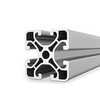
An aluminum slot-profile system is ideal for DIY builders: easy to assemble, removable, and usable without special equipment. For load-bearing structures, slot profiles such as Slot-6 (light furniture) or Slot-8 (beds, kitchen modules) are common choices. Bosch-type profiles (B-type) are especially versatile and widely compatible. For hands-on inspiration, check our project: Convert a VW Bus Yourself—including tips for furniture, bed builds, and storage solutions.
Connection tips:
-
Precise cuts (e.g., with a miter saw) for clean, square joints
-
Install profiles “on edge” to maximize stiffness
-
Use T-nuts, angle brackets, or cube connectors
-
Slot-6 for lighter furniture, Slot-8 for load-bearing builds like beds
Insulation & Thermal Protection in Camper Conversions
Good insulation protects your camper from cold, heat, and moisture. Aluminum profiles work well with insulation materials like mineral wool, PE foam, or rigid foam boards—supporting a stable and insulated interior concept. Tip: insulating strips or sleeves on the profiles can reduce thermal bridges. This helps keep the interior climate comfortable and energy use low—great for comfort and sustainability.
Electrics & Solar in Your Camper – Cleanly Integrated
Aluminum profiles provide a great base for clean cable routing and mounting sockets or electrical components. Many parts can be attached directly to the profile structure—securely and neatly. Solar panels on the roof can also be integrated into the system using suitable brackets, creating a robust, space-saving setup for off-grid power.

Safety & Comfort in DIY Builds with Aluminum Profiles
Thanks to their stability and corrosion resistance, aluminum profiles form a safe foundation for interior builds. High-quality connectors and precise assembly ensure that furniture stays secure—even on rough roads.
Combining aluminum frames with wood panels, plywood, or interior cladding improves both stability and comfort. Rounded edges, precise fits, and thoughtful storage solutions help create a safe, comfortable, long-lasting home on wheels.
Planning & Build Tips for Your DIY Camper Conversion
Planning first
Start by defining:
✔ what you need your van to do (sleeping, cooking, seating)
✔ how many people will travel / sleep inside
✔ which storage solutions you’ll need
Sketches & measurements
Simple sketches—or basic CAD plans—help prevent mistakes and ensure a perfect fit.
Materials list
Create a list of all required profiles, connectors, screws, and optional cladding panels.
Cutting & assembly
-
Cut profiles to size
-
Assemble in a logical sequence
-
Check stability after each step
-
Deburr edges for clean, safe results
Finish & design
For a more “homey” feel, add wood or plastic cladding, foam padding, or textile elements.
The Future of Camper Conversions
Camper builds with aluminum profiles benefit from new technologies and more sustainable materials. More DIY builders and professionals are choosing custom-cut aluminum profiles for individual and eco-friendly solutions—from clever furniture concepts to well-planned storage systems. A growing trend is the integration of solar power and smart onboard electrics that can be seamlessly mounted into the profile system. The result: more self-sufficient, energy-efficient campers that are ready for future demands.
Conclusion – Camper Conversion with Aluminum Profiles: Flexible, Lightweight, Custom
A camper conversion with aluminum profiles is a modern, flexible approach to your van build. Whether it’s just an aluminum-profile camper bed or a full set of furniture modules—profiles are lightweight, robust, and ideal for DIY projects. With modular or slot systems, you can build durable, stable structures that fit your vehicle perfectly.
Start your camper build today—aluminum profiles are a safe, smart choice!
FAQ – Camper Conversions with Aluminum Profiles
Is a camper build made from aluminum profiles stable enough?▸
Yes—properly sized profiles combined with high-quality connectors can create a very stable structure that also works off-road.
Do I need special tools?▸
Usually, a metal saw, cordless drill/driver, and wrenches are enough. For precise cuts, a miter saw or table saw is recommended.
Can I combine aluminum profiles with wood?▸
Yes—many builds use aluminum frames with wood or CNC-cut panels. This combines strength with a warm, cozy look.
How weather-resistant are aluminum profiles?▸
Aluminum is naturally corrosion-resistant, so profiles remain rust-free even in humid environments.
Which profile system is better for camper builds: Slot-6 or Slot-8?▸
Slot-6 works well for lighter furniture. Slot-8 is recommended for load-bearing modules like bed frames or kitchens.
Do I need a miter saw to cut aluminum profiles?▸
Clean, square cuts make joints stable and stress-free—so a miter saw (or another precise cutting method) is strongly recommended for effective use of aluminum profiles.

Author of this article
ABOUT
NILS
- Passionate about metal and aluminum
- Experienced product manager
- Solution-oriented and customer-focused
- Technically skilled and pragmatic
- Driven by digital innovation
