






Upcycling - Build Your Own Bike Rack
Build Your Own Bike Rack with PV Profiles – Stable, Modular & Sustainable
Reading time: approx. 6.5 minutes
Would you like to build your own bike rack that is sturdy, rust-free outdoors and easy to expand? With aluminum profiles (e.g. PV profiles / system profiles), you can create a durable DIY bike rack – perfect for your garage, yard or club.
In this article, we’ll show you how the idea was born, how many bikes it can hold and which materials you need – including FAQ.
▸Contents

Key Facts
- +
Building your own bike rack saves money and fits your space perfectly.
- +
Aluminum profiles are lightweight, stable and corrosion-resistant – ideal for outdoor use.
- +
With T-slot nuts, spacing can be flexibly adjusted to different tire widths.
- +
Modular and expandable – suitable for 2–6 bikes.
- +
PV profiles are versatile and ideal for upcycling leftover materials.
What are the advantages of building your own bike rack?
A DIY bike rack offers real benefits: You can reduce costs, reuse existing materials and tailor the rack exactly to your needs – whether for a road bike, MTB or e-bike. You also have full freedom regarding shape, width and number of parking spaces.
It’s sustainable, too: Using leftover pieces or recycled materials reduces waste while creating a long-lasting solution. And if you need more spaces later, a profile system can easily be expanded.
How did the idea come about?
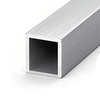
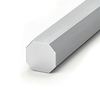
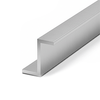
Our PV profiles made of strong, corrosion-resistant aluminum are available in lengths up to 6000 mm and can be cut to size. The upcycling idea emerged from the desire to use aluminum leftovers efficiently instead of wasting them.
The Hildesheim triathlon and endurance sports club TriAs was looking for material to build its own bike holders. We were able to provide leftover profiles – turning surplus material into sturdy bike racks that keep equipment organized and secure.
How many bikes fit on one rack?
The number mainly depends on tire width and the desired spacing. In our example, the rack is designed to hold up to four road bikes. For wider tires (e.g. e-bikes/MTBs), allow more space – T-slot nuts are ideal here because positions can be adjusted flexibly.
Tip: Plan roughly 2–3 inches (5–8 cm) of space per bike, depending on tire width – more for very wide tires.
What materials and tools do you need?
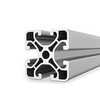
- PV aluminum profiles 40×40 (slot 8) – e.g. cut to 1800 mm & 600 mm
- T-slot nuts & screws for fastening and flexible adjustment
- Miter saw/metal saw (non-ferrous metal blade), cordless drill, wrench
- Tape measure/square, optional deburring tool for clean edges
The 1800 mm profiles form the frame. The 600 mm profiles are divided into rails for the tires – creating a stable, load-bearing base. You can build it alone, but two or three people make it easier.
More ideas for bike storage
If you want to store bikes efficiently, floor racks aren’t the only option. Wall mounts or vertical solutions save space. Bike boxes protect outdoors from weather, and lockable systems increase security. With profiles, you can also build modular systems – e.g. bike rack + shelf + tool holder in one unit.
Do you have other ideas on how to use PV profiles or system profiles? Share your DIY project with us via email at verkauf@alu-verkauf.de – we’d love to see it!
FAQ – Build Your Own Bike Rack
How do I build a sturdy outdoor bike rack?▸
For outdoor use, aluminum profiles are ideal because they are corrosion-resistant and won’t rust. Choose solid cross-sections (e.g. 40×40) and secure connections with T-slot nuts, brackets and suitable screws.
Which materials are suitable for a durable bike rack?▸
Metal profiles (aluminum, steel) are popular, as well as wood (mainly for indoor/covered use). Aluminum is lightweight, durable and perfect for DIY projects – especially in garages or outdoor areas.
Which tools are recommended?▸
A miter saw/metal saw (non-ferrous blade), cordless drill, wrench and measuring tools are usually sufficient. For clean edges, use a deburring tool or file.
How wide should a bike rack be?▸
This depends on tire width. Plan around 2–3 inches (5–8 cm) per bike (less for road bikes, more for e-bikes/MTBs). With T-slot nuts, spacing can be adjusted later.

Author of this article
ABOUT
NILS
- Passionate about metal and aluminum
- Experienced product manager
- Solution-oriented and customer-focused
- Technically skilled and pragmatic
- Driven by digital innovation
