






AlCuMgPb (EN AW-2007) – The high-strength machining alloy for precision processing
The aluminum alloy AlCuMgPb (EN AW-2007), also known under material number 3.1645, is one of the best machining alloys for high-precision turned and milled parts. With its excellent machinability, high mechanical strength, and good surface quality, it is frequently used in the automotive, mechanical engineering, and electrical industries.
What is AlCuMgPb (EN AW-2007)?
The aluminum alloy AlCuMgPb (EN AW-2007) belongs to the group of hardenable aluminum-copper alloys. The addition of magnesium (Mg) and lead (Pb) improves machinability, making this material particularly suitable for CNC machining.
Chemical Composition of EN AW-2007
| Element | Weight (%) |
|---|---|
| Aluminum (Al) | 90.3 – 94.7 |
| Copper (Cu) | 3.3 – 4.6 |
| Magnesium (Mg) | 0.4 – 1.8 |
| Lead (Pb) | 0.8 – 1.5 |
| Manganese (Mn) | 0.5 – 1.0 |
| Iron (Fe) | max. 0.8 |
| Silicon (Si) | max. 0.8 |
This composition gives EN AW-2007 a very good combination of strength and machinability, ideal for high-precision components with tight tolerances.
Properties & Advantages of AlCuMgPb (EN AW-2007)
- Excellent machinability – Perfect for CNC turned parts
- High mechanical strength – Especially for heavily stressed components
- Good dimensional stability & surface quality – Minimal post-processing required
- Low density – Lighter than steel, but similarly strong
- Excellent corrosion resistance with coating
- Not weldable – Alternative joining techniques required
- Moderate corrosion resistance – Protection by anodizing or coating recommended
Mechanical Properties of EN AW-2007
| Property | Value |
|---|---|
| Tensile strength (Rm) | 370 – 450 MPa |
| Yield strength (Rp0.2) | 250 – 350 MPa |
| Brinell hardness (HBW 10/500) | 110 – 140 |
| Density | 2.85 g/cm³ |
| Modulus of elasticity | 72 GPa |
| Melting point | 500 – 650 °C |
These values show that EN AW-2007 is one of the best machining alloys and is suitable for demanding technical components.
Comparison: AlCuMgPb (EN AW-2007) vs. EN AW-7075
Many industrial applications use either AlCuMgPb (EN AW 2007) or EN AW 7075. But what are the differences between these two alloys?
| Property | EN AW 2007 (AlCuMgPb) | EN AW 7075 |
|---|---|---|
| Machinability | ⭐⭐⭐⭐⭐ Very good |
⭐⭐⭐ Good |
| Strength | ⭐⭐⭐⭐ High |
⭐⭐⭐⭐⭐ Very high |
| Weldability | ❌ Not weldable |
❌ Difficult |
| Corrosion resistance | ⭐⭐ Moderate |
⭐⭐ Moderate |
EN AW 2007 offers better machinability, while EN AW 7075 is used for extreme loads (e.g. aerospace).
Typical Applications for EN AW-2007
Thanks to its excellent mechanical properties, this alloy is primarily used for precision components, including:
- Automotive industry – Pistons, gears, bearing bushes
- Mechanical engineering – CNC-machined turned parts, spindles, axles
- Electrical engineering – Connectors, contacts, nuts, screws
- Aerospace engineering – Mechanical components with high tensile stress
Due to its high dimensional stability, EN AW 2007 is particularly suitable for turned and milled parts with tight tolerances.
Aluminum EN AW-2007 – Which products are available?
At alu-verkauf.de you will find a large selection of products made of EN AW 2007, including:
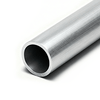
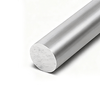
- Aluminum round bars – Ideal for CNC turned parts, available in various diameters
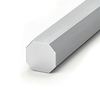
- Hexagonal bars – Perfect for mechanical components with high load
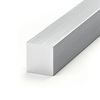
- Precision milled plates – High-precision, suitable for exact machining
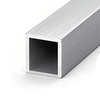
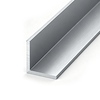
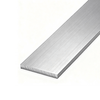
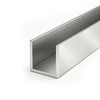
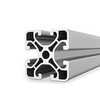
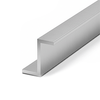
- Extruded profiles – For specific constructions and lightweight projects
With various diameters and customized cuts, alu-verkauf.de offers an optimal selection for industry and trade.
Why AlCuMgPb (EN AW-2007)?
The aluminum alloy EN AW 2007 is the perfect choice for high-precision turned and milled parts that require very good machinability and high strength. It is indispensable, particularly in the automotive, mechanical engineering, and electrical industries.
Advantages:
- Excellent machinability – Ideal for CNC machining
- High mechanical strength
- Very good dimensional stability & surface quality
Disadvantages:
- Not weldable
- Moderate corrosion resistance – Surface treatment required
