






Building your own raised aluminum garden bed: The ultimate DIY guide
Reading time approx. 8 minutes
A raised bed is a space-saving and back-friendly way to grow vegetables, herbs, or flowers. A construction made of aluminum angle profiles and boards makes it particularly durable and stable. The aluminum profiles form the edge finishes, while the boards serve as the side walls.
In this guide, we will show you how to build a raised bed yourself using aluminum angle profiles. You will learn about the advantages of this construction method, which materials you need, and what you should consider regarding planning, assembly, and filling.
Content

The Essentials in Brief
-
+
The construction consists of aluminum angle profiles and boards as side walls.
-
+
The aluminum angles serve as edge finishes, protect the corners, and stabilize the frame.
-
+
Boards provide a natural look, while aluminum makes the construction more durable and dimensionally stable.
-
+
The correct layer structure improves yield, drainage, and soil quality.
Why a raised bed with aluminum angles?
A raised bed with aluminum angle profiles and boards combines the advantages of both materials: the boards provide a natural garden aesthetic, while the aluminum angles protect the corners, stabilize the frame, and provide a neat finish.
The most important advantages:
- stable edge finish due to aluminum angles
- neat and modern outer edges
- boards remain visible as natural side walls
- aluminum does not rust like steel and is well-suited for outdoor use
- simple bolting without welding
- customizable in size and location
Additionally, a raised bed allows for back-friendly gardening. Due to the raised working height, you have to bend over less, can reach your plants better, and can manage bed maintenance, sowing, and harvesting much more comfortably.
Important regarding thermal behavior: Aluminum conducts heat more strongly than wood. Since only the edges are made of aluminum in this construction and the side surfaces are built from boards, the warming is less than in a raised bed with all-metal sides. In very hot locations, however, a light-colored surface or a semi-shaded spot may still be sensible.
Location & Planning for Your Raised Bed
Before you build your raised bed, you should determine the appropriate location. For vegetables, herbs, and many flowering plants, a sunny to semi-shaded spot is ideal. Also, make sure that the raised bed is sheltered from the wind and is easily accessible.
Important points for planning:
- level and load-bearing ground
- sufficient sunlight
- short path to the water supply
- enough space to work around the bed
- appropriate size for garden, balcony, or terrace
Recommended dimensions:
- Height: approx. 70–100 cm
- Width: maximum 120 cm so that you can easily reach the center
- Length: customized according to space availability
Note: A fully filled raised bed can weigh several hundred kilograms depending on its size. Therefore, on a balcony or roof terrace, the permissible load capacity should definitely be checked before assembly.
Which aluminum profiles are used?
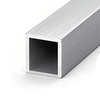
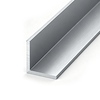
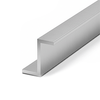
For this construction method, you use 35x35 mm aluminum angle profiles with a 2 mm wall thickness. The angle profiles are mounted on the four vertical corners and serve as a stable edge finish. Additionally, they can be used on the top edges to protect the boards and give the raised bed a clean look.
The side surfaces are created from boards that are bolted between or onto the angle profiles. This creates a stable frame with a natural look and resilient aluminum edges.
| Material | Usage | Advantage |
|---|---|---|
| 35x35x2 mm aluminum angle profile | vertical corner posts and edge finish | stabilizes the corners and protects the outer edges |
| Boards | side walls of the raised bed | natural look and easy processing |
| Stainless steel screws | connecting angles and boards | corrosion-resistant and durable |
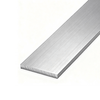
| Optional: aluminum flat profile | internal reinforcement of longer sides | reduces warping with long boards |
Anodized or coated aluminum angle profiles are recommended for outdoor use. You can find more about this in our article on anodizing.
For the outdoor area, stainless steel screws are particularly suitable as they are corrosion-resistant and can reduce contact corrosion.
Suitable Products for Your Raised Bed
Recommended Materials
For a raised bed with stable aluminum edges, we mainly recommend aluminum angle profiles for the corners and edges as well as aluminum flat profiles for optional reinforcement of longer sides.

Material List for a Raised Bed with Aluminum Angles and Boards
For a stable DIY raised bed, you will need the following materials depending on the desired size:
- 4 × 35x35x2 mm aluminum angle profiles for the vertical corners
- Boards for the side walls, e.g., larch, Douglas fir, or black locust
- optional: aluminum flat profiles for internal reinforcement of long sides
- stainless steel screws for attachment
- drill bits suitable for aluminum and wood
- measuring tape, square, and pencil for marking
- hacksaw or custom-cut
- wood saw, if the boards are to be cut yourself
- vole mesh for the bottom
- garden fleece or foil
- compost and raised bed soil
Example for a simple construction:
- 4 × aluminum angle profile 35x35x2 mm as vertical corner posts
- several boards per side, depending on the height and length of the raised bed
- stainless steel screws for attaching the boards to the angle profiles
- optional flat profiles inside if longer sides are to be additionally stabilized
Many aluminum profiles can be ordered directly to size. This saves you time on cutting and provides clean edges for quick assembly.
You can learn more about suitable materials and properties in the article on aluminum alloys.
Building a Raised Bed from Aluminum Angles and Boards – Step by Step
1. Determine dimensions
First, determine how high, wide, and long your raised bed should be. For comfortable working, a height between 70 and 100 cm is recommended. The width should be a maximum of about 120 cm so that you can easily reach the center of the bed.
2. Prepare aluminum angle profiles
Cut four 35x35x2 mm aluminum angle profiles to the desired height or order them directly to the matching size in our shop. These profiles form the vertical corners of the raised bed and simultaneously serve as a stable edge finish.
3. Cut boards
Cut the boards to the desired length. For each side, several boards are placed on top of each other until the desired raised bed height is reached. Ensure all boards are cut cleanly and evenly.
4. Mark drill holes
Place the boards against the aluminum angle profiles and mark the drill holes. The screws should be evenly spaced so that the boards are securely connected to the angles.
5. Pre-drill aluminum angles
Pre-drill the marked spots in the aluminum angle profiles. Use a suitable metal drill bit for this. Pre-drilling facilitates assembly and prevents screws from being set at an angle.
6. Bolt side walls
Bolt the boards to the aluminum angle profiles. Start with one long side and then attach the short sides. Regularly check whether the corners are square.
7. Close the frame
When all four sides are connected, a closed rectangular frame is created. Tighten all screws and check if the raised bed is stable.
8. Optional: Mount flat profiles for reinforcement
For long side walls, aluminum flat profiles can be mounted on the inside. They additionally stabilize the boards and prevent the sides from bulging outward due to earth pressure.
9. Prepare the ground and insert vole mesh
If the raised bed is placed directly on earth or lawn, you should insert a vole mesh on the bottom. It protects the plant roots from rodents.
10. Line the insides
With this board construction, an inner foil or garden fleece is useful to protect the wood from permanent moisture and reduce soil leakage. Ensure that water can still drain well.
When combining different metals, a separating layer may also be useful to avoid contact corrosion.
11. Fill the raised bed
After assembly, the correct filling follows. The layer structure determines how well water drains and how many nutrients are available to your plants.
Filling the raised bed correctly – the optimal layer structure
A raised bed should not simply be filled with earth. The classic layer structure ensures better drainage, more nutrients, and natural heat development through decay.
Proven structure for vegetables and herbs:
- Branches and brushwood as a drainage layer
- Green waste, leaves, or upturned sod
- half-ripe compost or garden waste
- ripe compost
- high-quality raised bed soil or potting soil
The lower layers decay slowly and release heat and nutrients in the process. This creates a particularly good microclimate for vegetables, herbs, and many flowering plants.
Since the raised bed will settle over time, you should refill earth or compost annually. After a few years, it may make sense to completely renew the layer structure.
Using a raised bed with a cold frame attachment
With a cold frame attachment, you can use your raised bed earlier in the year. A transparent cover stores heat and protects young plants from frost, wind, and heavy rain.
Popular extensions are:
- Raised bed with cover
- Raised bed with lid
- Cold frame attachment made of polycarbonate
- Slug protection
- additional intermediate shelves or storage
Due to the aluminum angle profiles, an attachment can be easily fastened or retrofitted later.
Tips for long-lasting raised beds with aluminum angles
- use 35x35x2 mm aluminum angle profiles as a stable corner solution
- use weather-resistant boards or appropriately treated wood fillings
- use stainless steel screws
- cleanly pre-drill drill holes
- protect boards inside with foil or garden fleece
- avoid waterlogging
- level the ground before assembly
- regularly check screws
- refill earth annually
- cleanly deburr open edges
If you would like to learn more about aluminum surfaces, you can find more information here regarding surfaces.
Aluminum angles & boards vs. pure wood – which material is better?
| Property | Aluminum angles & boards | Pure wood |
|---|---|---|
| Corner stability | very good due to aluminum angles | depends on wood thickness and connection |
| Edge finish | clean, dimensionally stable and robust | can fray or get damaged |
| Appearance | combination of modern and natural | natural |
| Maintenance required | low to medium | regular wood maintenance necessary |
| Service life | high with good wood selection and protection | depends on wood type and moisture protection |
The combination of aluminum angles and boards is ideal if you want to combine a natural wood look with stable, clean, and durable edges. Compared to a pure wood raised bed, the corners in particular are better protected and more dimensionally stable.
FAQ about raised beds with aluminum angles
Are raised beds with aluminum angles good?
Yes, this design is stable, durable, and visually appealing. The aluminum angles protect the edges and reliably connect the side walls.
Which aluminum profiles are suitable for a raised bed?
For this construction, 35x35 mm aluminum angle profiles with a wall thickness of 2 mm are particularly suitable. They serve as corner posts and edge finishers. Aluminum flat profiles can additionally be used to reinforce longer sides.
Can you build a raised bed with aluminum angles and boards yourself?
Yes, the construction can be easily implemented yourself with aluminum angle profiles, boards, and stainless steel screws. Welding is not necessary.
Which boards are suitable for a raised bed?
Weather-resistant or appropriately treated boards are suitable. It is important that they are stable enough and protected from constant moisture. Larch, Douglas fir, or other weather-resistant wood types are particularly popular.
How long does a raised bed with aluminum angles last?
The aluminum angles are very durable and corrosion-resistant. The service life of the boards depends on the wood type, moisture protection, and maintenance.
Is aluminum harmful to plants?
With this construction method, primarily the edges are made of aluminum, while the side surfaces are built from boards. Lining the inside with garden fleece or suitable foil can additionally help to protect the wood and the structure from constant moisture. For vegetables, herbs, and ornamental plants, you should also ensure suitable soil, good drainage, and clean materials.
How do you fill a raised bed correctly?
A raised bed is filled in layers: coarse material such as branches at the bottom, topped with green waste, compost, and high-quality raised bed soil at the top.
Can you fill a raised bed only with soil?
In principle, yes. However, a layered structure improves drainage, nutrient supply, and heat development.
When should you set up a raised bed?
Spring or autumn are ideal. That is when garden waste is frequently generated, which is well-suited for filling the bed.
What height should a raised bed have?
For comfortable and back-friendly work, a height between 70 and 100 cm is recommended.

Author of this article
ABOUT
MIKE
- Over 15 years of hands-on experience in metalworking and the trades
- Strong technical intuition
- Develops practical, sustainable solutions
- Expert customer support and consulting
