




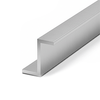



Build your own dog crate for the car: Transport box made of aluminum profiles
Reading time approx. 7 minutes
A custom-fit dog crate in the trunk creates a protected and comfortable space for your dog on the go. A DIY solution made from aluminum square tubes is particularly practical if the crate needs to fit your vehicle, trunk height, and your dog's size exactly.
With aluminum square tubes, suitable tube connectors, and panel elements, a robust dog transport crate can be individually designed. Not only the dimensions are important, but also ventilation, secure fastening, smooth edges, and sufficient space for the dog.
Table of Contents

The Essentials in Brief
-
+
A dog crate made from aluminum square tubes can be precisely planned for the trunk.
-
+
Precise dimensions, suitable tube connectors, ventilation, and secure fastening are important.
-
+
Aluminum is light, corrosion-resistant, and easy to work with.
Planning: What dimensions does the dog crate need?
Before you build a dog crate yourself, you should accurately measure the trunk and your dog. The width, depth, and height of the available space, as well as the size of the dog, are crucial. The dog should be able to lie down, sit, and turn around comfortably without the crate being unnecessarily large.
For two dogs, a divided crate can be sensible. A custom-fit construction ensures that both dogs have their own area and the crate makes good use of the available trunk space.
Why aluminum square tubes for a dog crate?
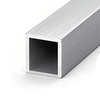
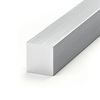
Aluminum square tubes are well-suited for classic frame constructions because they are lightweight, stable, and corrosion-resistant. They are easy to cut, drill, and assemble with suitable tube connectors or other joining solutions.
For the basic frame, struts, and simple grid areas, aluminum square tubes can be a sensible solution. Which dimension and wall thickness is suitable depends on the crate size, span, connection technology, and load.
For side walls, rear wall, roof, or floor, aluminum plates or other suitable panel materials can be used. For the floor, appropriate material thickness, substructure, and a non-slip covering are particularly important.
Build your own dog crate for the trunk
A dog crate for the trunk should fit as precisely as possible and not slide around during the journey. Secure fastening to suitable points in the vehicle is particularly important. The tailgate, rear seats, belts, lashing eyes, and existing vehicle dimensions must also be considered in the planning.
The door of the crate should open easily without blocking the tailgate or bumper edge. In addition, the dog should be able to get in and out comfortably.
Ventilation, Visibility and Comfort
A dog transport crate must not be completely closed. Sufficient ventilation is important to prevent heat buildup and ensure the dog gets enough air while traveling. Grid areas, open profile sections, or perforated elements can help with this.
For more comfort, the floor can be covered with a non-slip mat or blanket. It is important that the dog stands securely and does not slide unnecessarily during braking maneuvers.
Safety with a DIY Dog Crate
A self-built dog crate must be stable, cleanly processed, and securely fastened. Make sure there are no sharp edges, exposed screws, or loose components. All connections should be firm and checked regularly.
Safety is especially important in the car. The crate should be designed so that it does not slide during normal driving, braking maneuvers, and cornering. In case of heavy loads or uncertainty, the construction should be professionally reviewed.
Possible Materials
- Aluminum square tubes for basic frame and struts
- Tube connectors for suitable corner and frame connections
- Aluminum plates or aluminum sheets for side panels, rear wall, roof, or floor
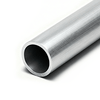
- Aluminum round tubes or struts for open grid areas
- Hinges and latches for the door
- Screws, brackets, or suitable fasteners
- Non-slip mat or insert for the floor
Suitable Products for Your Dog Crate
Products for Your Aluminum Dog Crate
For a robust dog crate in the trunk, you can use aluminum square tubes for the basic frame, tube connectors for suitable corner and frame connections, and aluminum plates or aluminum sheets for side panels, floor, rear wall, or roof. When building a dog crate for the car, make sure that the construction, fastening, and size match the load, the dog, and the vehicle.


Note: A self-built dog crate should always be properly secured in the vehicle. For use in the car, size, fastening, material thickness, and tested safety are crucial.
Advantages of a DIY Aluminum Dog Crate
- Can be custom-planned for the trunk
- Lightweight yet stable
- Corrosion-resistant and easy to maintain
- Individually adaptable to dog, vehicle, and storage space
- Easily combinable with square tubes, tube connectors, panels, and accessories
Conclusion
An aluminum square tube dog crate is a practical DIY solution if you want to build a custom-fit transport box for the trunk. Careful planning, stable connections, good ventilation, and secure fastening in the vehicle are crucial.
FAQ: Building your own dog crate for the car
Can you build a dog crate yourself? ▸
Yes, a dog crate can be built yourself if the dimensions, material, stability, and fastening are carefully planned. Aluminum square tubes are well-suited for individual frame constructions in the trunk.
Which aluminum profiles are suitable for a dog crate? ▸
Aluminum square tubes can be used for the frame. Which tube size is sensible depends on the size of the crate, the dog, the fillings, and the planned fastening.
How big should a dog crate be in the car? ▸
The dog should be able to lie down, sit, and turn around comfortably in the crate. At the same time, the crate should not be unnecessarily large so that the dog does not slide around too much during the journey.
How do I secure a dog crate in the trunk? ▸
The crate should be secured in such a way that it does not slide during normal driving, curves, and braking maneuvers. Suitable lashing eyes, straps, or vehicle-specific fastening points can help with this.
Is a self-built dog crate allowed in the car? ▸
A dog crate must be used in such a way that the dog is transported safely and does not pose a danger to occupants or traffic. For a self-built solution, stability, fastening, and workmanship should be particularly carefully checked.
What is better: dog crate, partition grille, or dog harness? ▸
That depends on the vehicle, dog, and use. A dog crate can create a protected area, a partition grille separates the trunk, and a dog harness secures the dog on the seat. A safe and suitable solution is always important.
How long can a dog stay in the dog crate? ▸
That depends on the dog, its acclimatization, temperature, ventilation, and travel duration. The crate should not be a permanent place of residence. For longer journeys, breaks, water, and exercise are important.

Author of this article
ABOUT
NILS
- Passionate about metal and aluminum
- Experienced product manager
- Solution-oriented and customer-focused
- Technically skilled and pragmatic
- Driven by digital innovation
